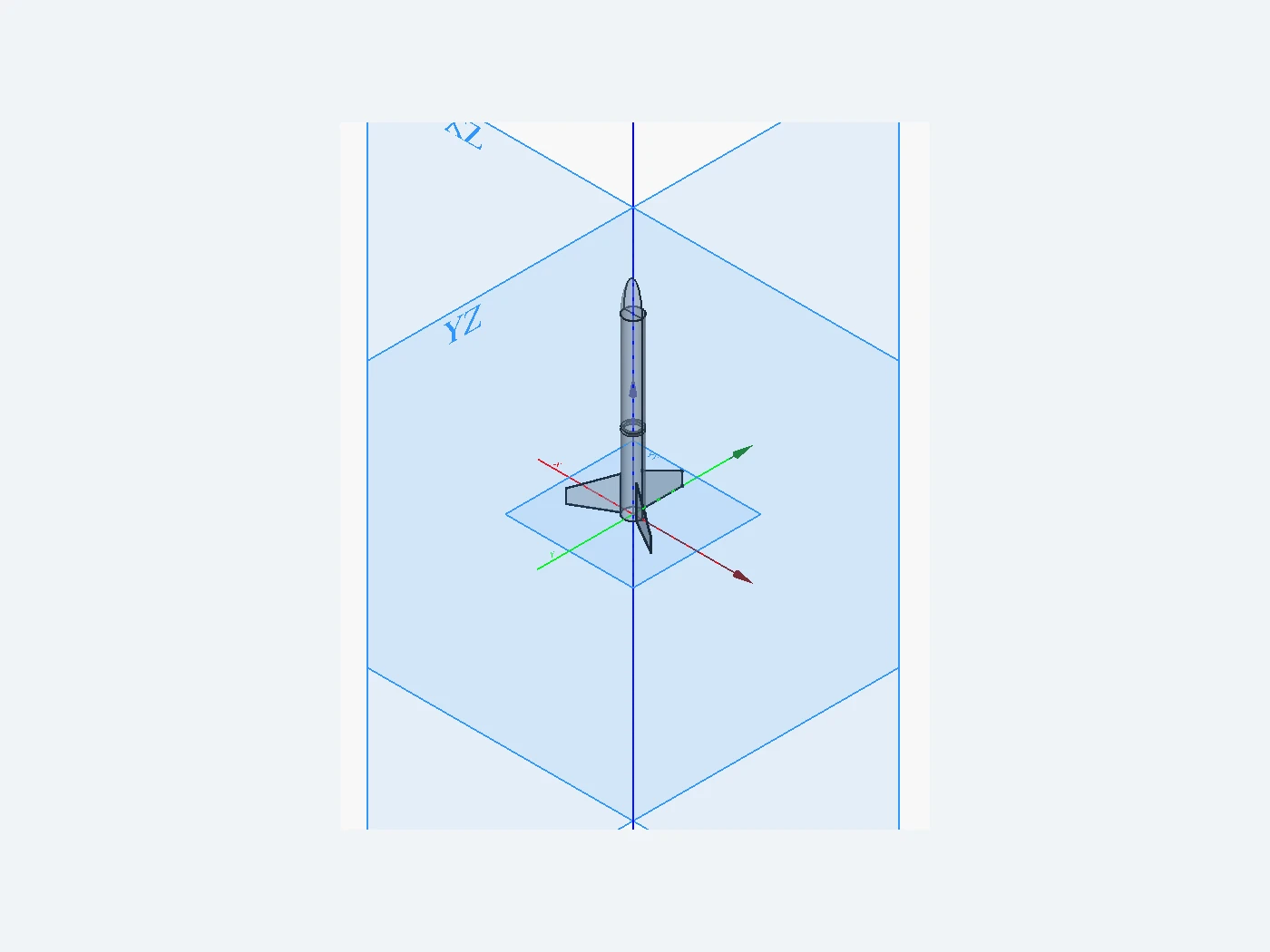
The job was not only to sketch a shape. The platform had to be defined as an engineering system: airframe, propulsion boundary, steering logic, payload mass constraint, models, and implementation assumptions had to fit together before detailed work continued.
Project baseline
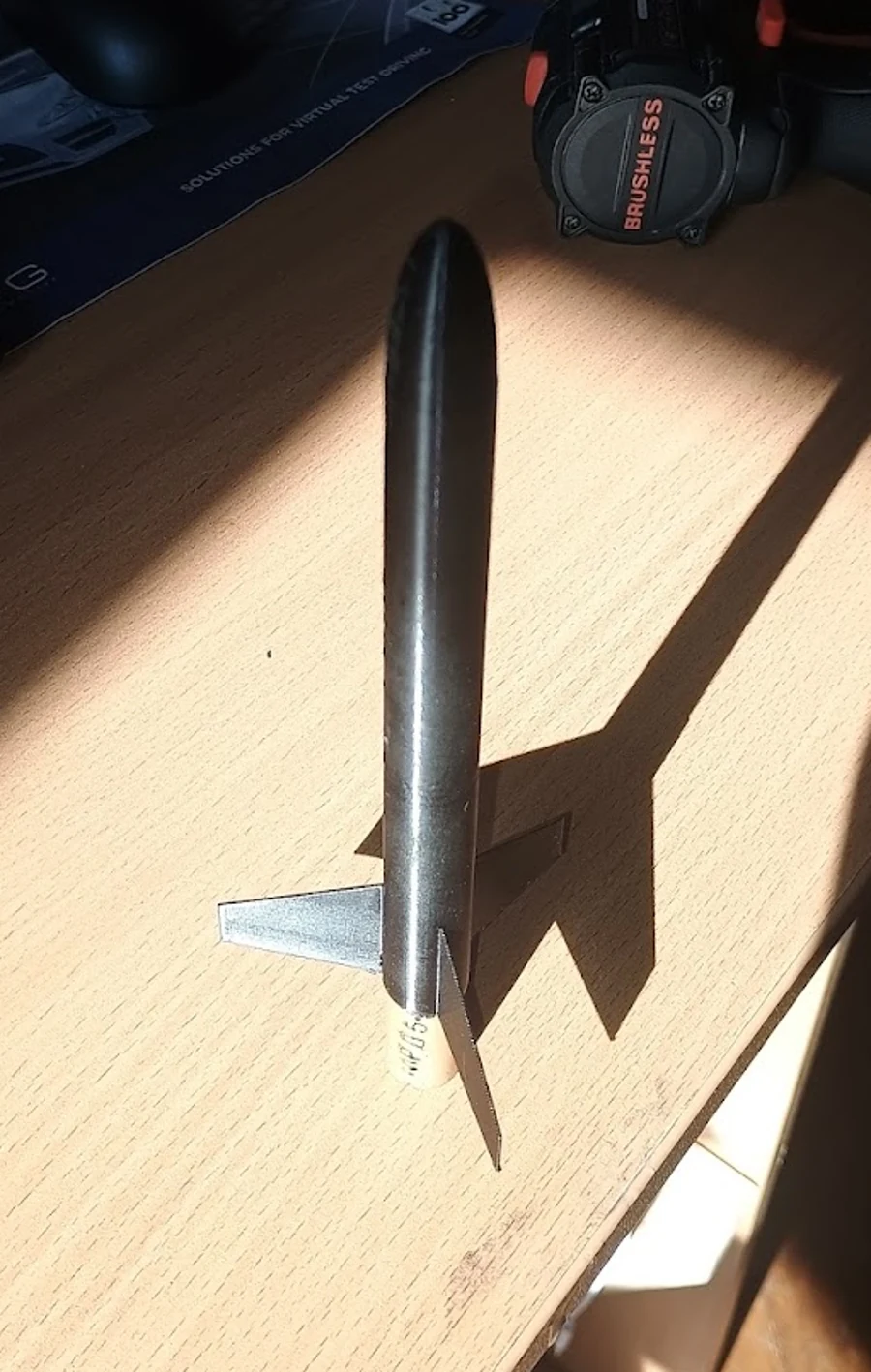
Target productCompact rocket platform with a body length of approximately 40 cm and a ready motor integrated into the overall concept.
Payload constraintPayload mass budget around 110 g, treated as an allocated system boundary for sizing and packaging.
Dynamic premiseSolid-fuel motor active for roughly 20 seconds, requiring the platform concept and models to consider the powered flight segment explicitly.
System definition scope
Requirements baselineMission-level assumptions, geometric envelope, mass constraints, steering need, and the basic propulsion/payload premises were consolidated into a compact technical baseline.
Architecture splitAirframe, motor interface, steering surfaces, actuation chain, battery, and model-based analysis were separated as clear work packages with visible dependencies.
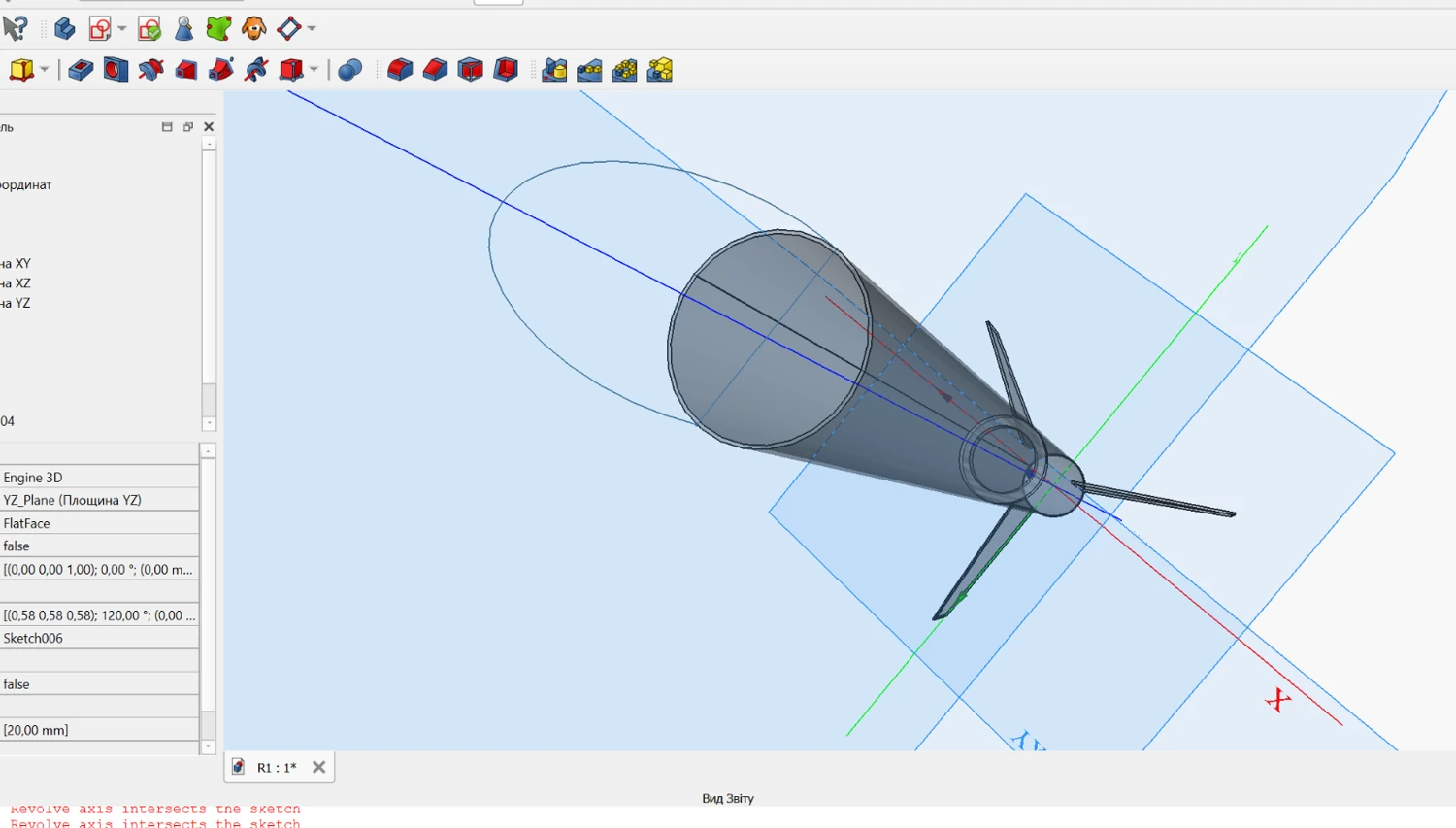
Steering conceptThree aerodynamic rudders were defined as the control concept, with the rear layout chosen around stability, packaging, and actuation feasibility.
Analytical supportMATLAB/Simulink models were planned and used for motor burn, flight behaviour, altitude/range reasoning, and electrical sizing support.
Engineering route
- FrameDefine geometry, payload boundary, powered-flight assumption, and steering need.
- AllocateSplit the platform into body, propulsion, surfaces, actuation, power, and model blocks.
- ModelPrepare motor-burn and flight-behaviour models to support early design choices.
- CoordinateConnect the system definition with mechanical layout and implementation-ready assumptions.
- HandoverProduce a compact engineering basis for detailed mechanical work and further prototype evolution.
Artifacts used for the case
Result
A small aerospace case with a clean technical backbone.
The outcome was a compact, reviewable system basis for the platform: size and mass constraints, propulsion assumption, steering concept, and model-supported reasoning were aligned before detailed implementation. This reduced ambiguity for the next mechanical and modelling steps.