The mechanical work had to stay practical. The body was designed around a real motor boundary and a compact platform size, while the rear section had to carry three aerodynamic surfaces and remain usable for steering, packaging, and later prototype realization.
Mechanical scope
BodyCompact cylindrical airframe with a nose profile, prepared as a simple but controllable mechanical basis for further work.
Motor interfaceReady-motor integration was considered part of the body concept, including rear packaging and geometric dependency around the propulsion section.
Control surfacesThree rear aerodynamic rudders were integrated as the selected steering surfaces, positioned to stay compatible with the body and actuator concept.
Models and engineering support
Motor burn modelUsed to represent powered-flight behaviour and to provide the basic dynamic premise for the rest of the platform analysis.
Flight modelPrepared in MATLAB/Simulink to reason about trajectory, range, altitude, and the effect of design assumptions.
Actuator and power sizingActuator selection and battery capacity were considered from a practical integration viewpoint, not as disconnected catalogue choices.
Prototype relevanceThe modelling and body layout supported quick physical realization and proportion checks in parallel with digital design.
Design route
- ShapeDefine the body and nose geometry within the compact platform envelope.
- IntegrateReserve the rear section for motor and steering-surface logic.
- ModelUse MATLAB/Simulink to support burn, flight, and power assumptions.
- CheckValidate packaging practicality and proportions with CAD views and a quick physical prototype.
- PrepareLeave the concept ready for deeper detailing, actuation work, and iterative refinement.
Visual artifacts
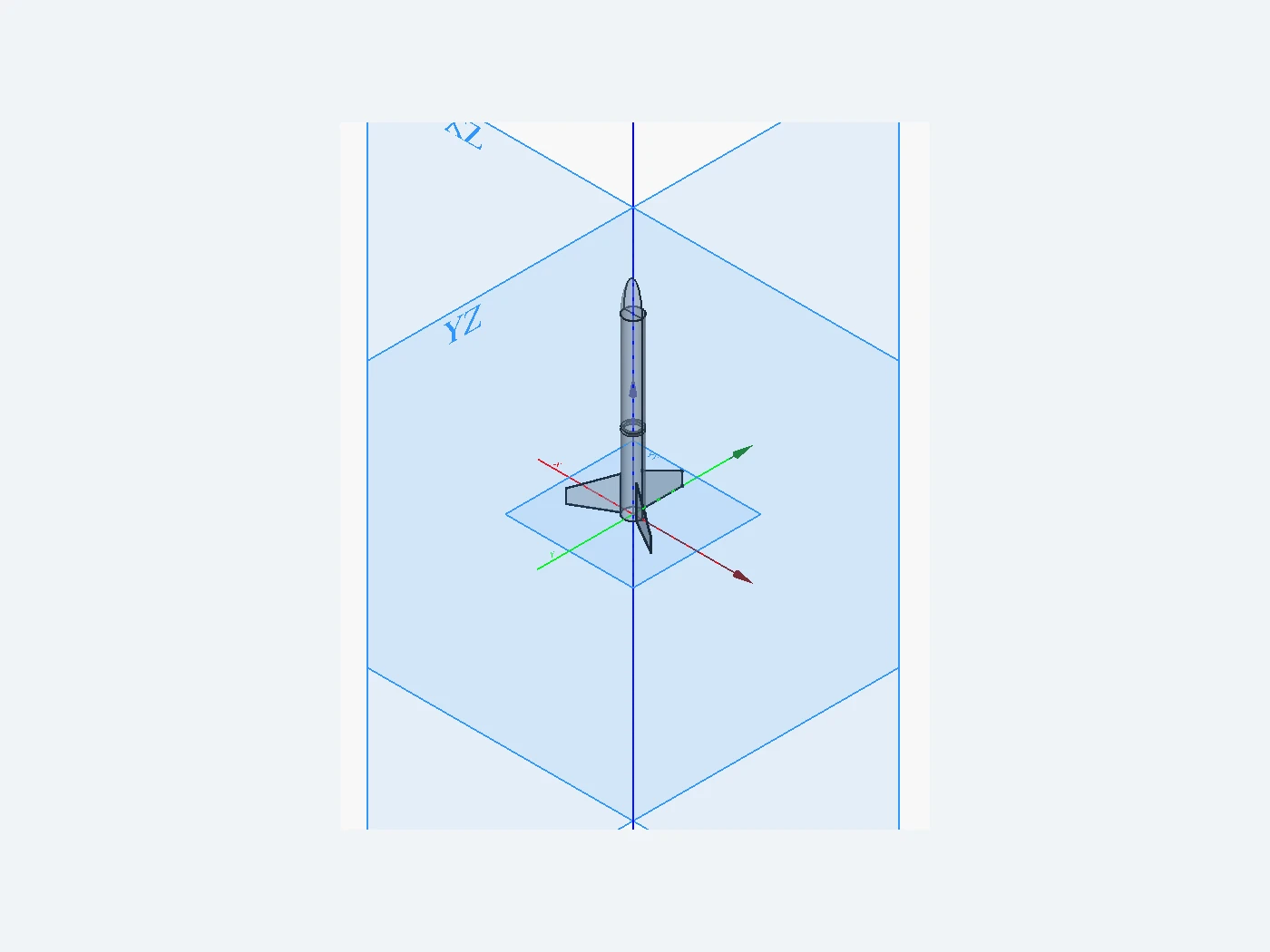
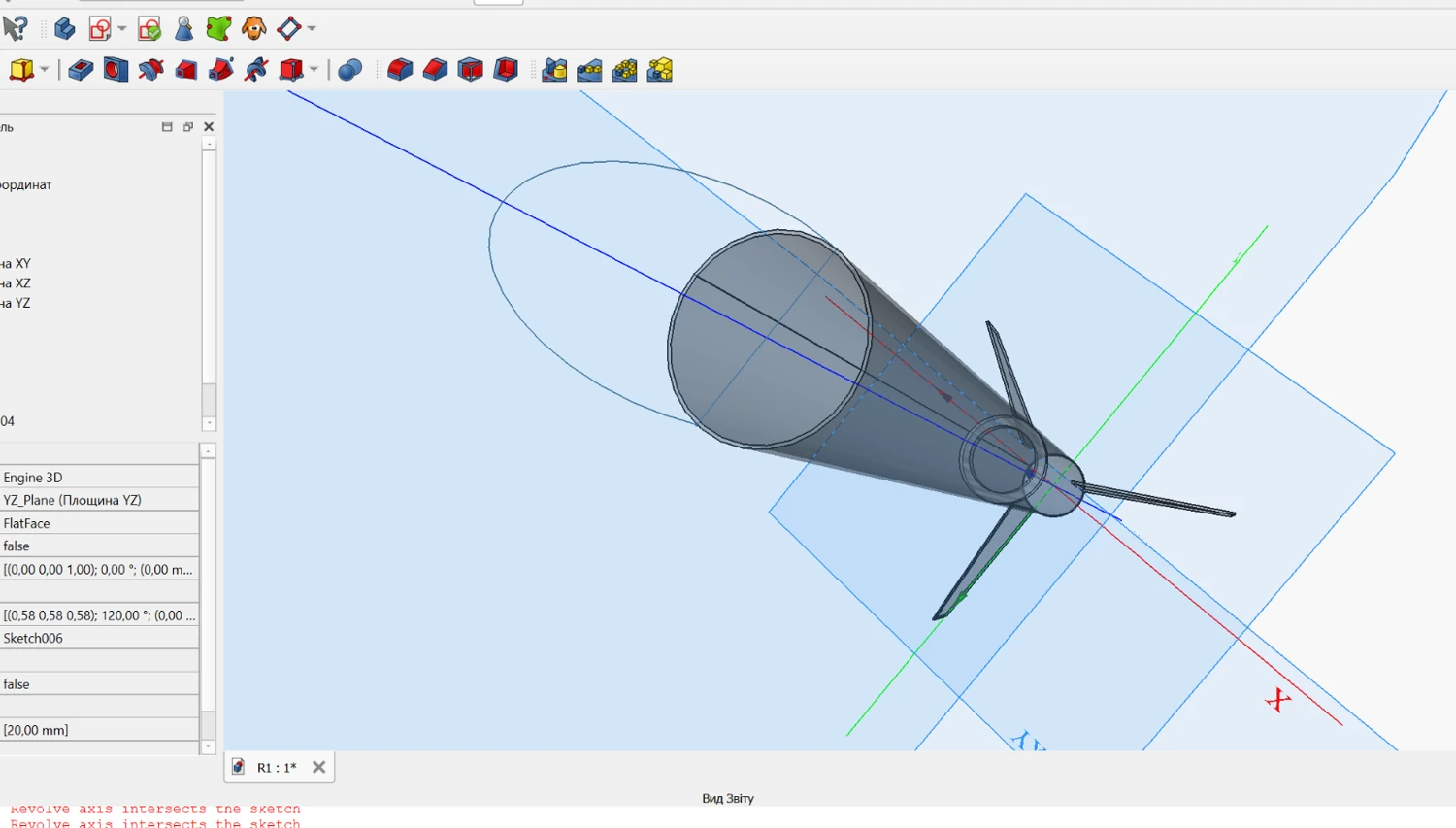
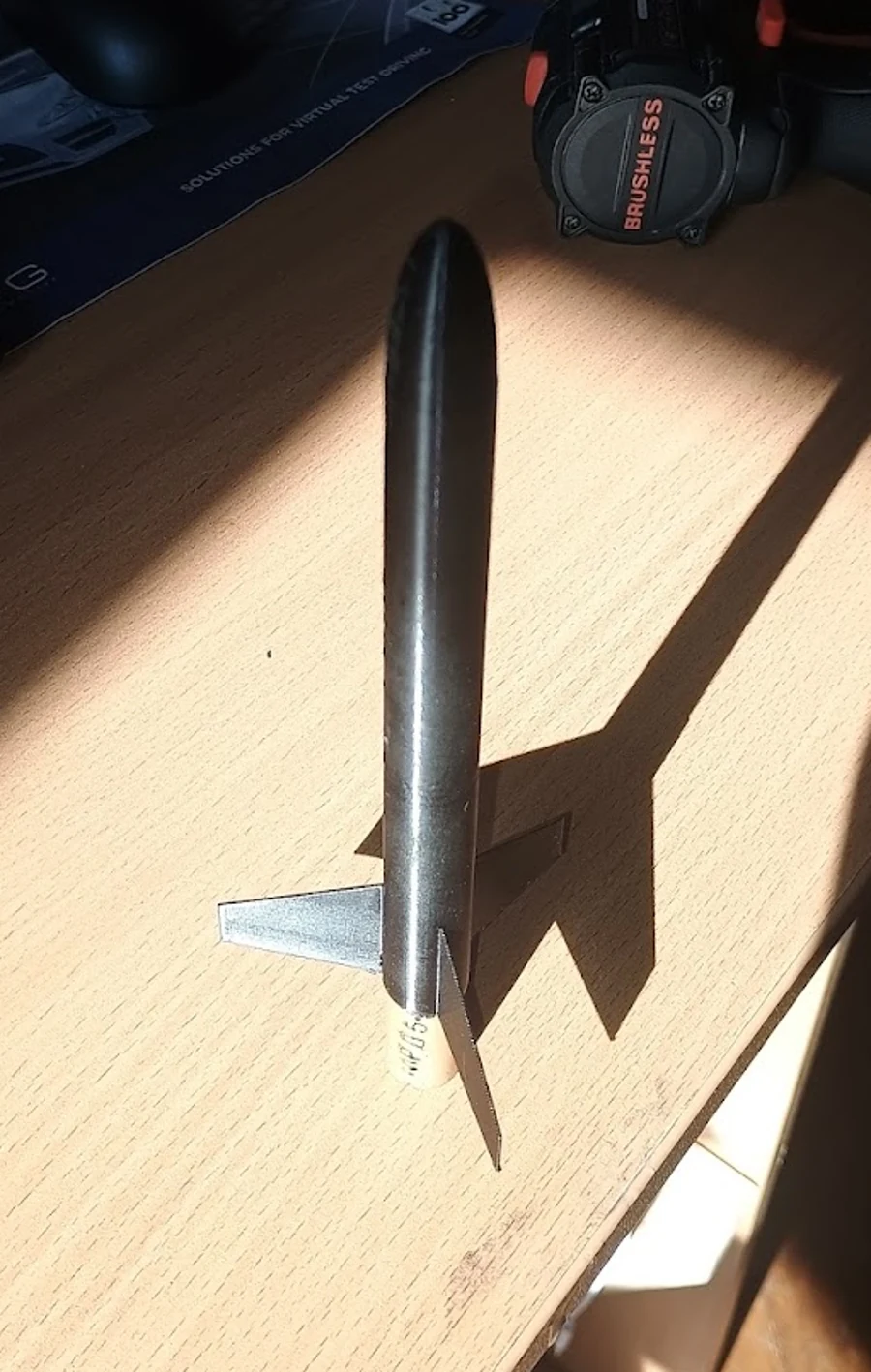
Result
A compact mechanical concept backed by useful models.
The deliverable was a clean mechanical basis for the rocket body together with model-backed reasoning for propulsion and flight behaviour. The concept remained simple, technically consistent, and ready for the next design iteration.