Engineering Challenge 2026: ContiMech Support, Event Outcomes, and Process Feedback
From computing heritage to working embedded prototypes.
ContiMech supported Engineering Challenge 2026 as a financial sponsor and jury participant. This updated post now includes the event-day outcomes and observations.
Part 1 — Before the event
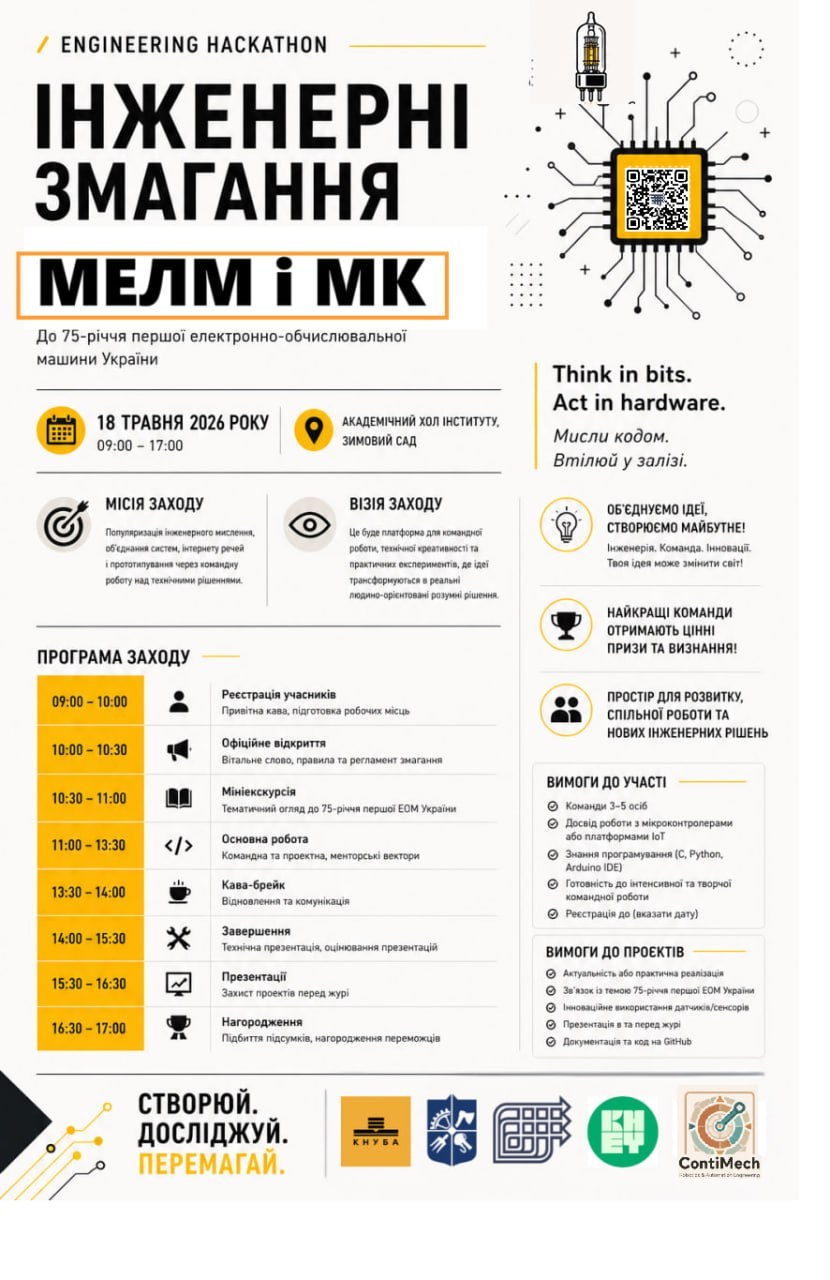
On 18 May 2026, the V.M. Glushkov Institute of Cybernetics hosted Engineering Challenge “МЕЛМ і МК” — an engineering hackathon dedicated to the 75th anniversary of MELM/MESM, the first small electronic calculating machine in continental Europe.
The event connected several university environments, including Igor Sikorsky Kyiv Polytechnic Institute (KPI), Kyiv National University of Construction and Architecture (KNUBA), and Kyiv National Economic University named after Vadym Hetman (KNEU).
ContiMech would like to thank Igor Sikorsky KPI and especially the Department of Automation and Design of Energy Processes and Systems (APEPS) for the invitation and for involving us in this engineering education initiative.
The event linked Ukrainian computing history with current engineering practice: embedded software, microcontroller platforms, IoT, hardware prototyping, robotics, and practical system integration.
ContiMech role
- Financial support. ContiMech funded the event and supported the prize pool for the strongest engineering results.
- Jury participation. ContiMech representatives evaluated projects together with other jury members.
- Technical focus. Evaluation prioritized implementation quality, system architecture, feasibility, prototype readiness, documentation, and practical value.
Why it matters
For ContiMech, this is a direct investment in engineering culture. A strong prototype is not only an idea. It is a working technical system with defined interfaces, measurable behavior, hardware/software integration, and a path to validation.
This is the same engineering logic that drives modern robotics, automation, and cyber-physical systems: move from concept to prototype, from prototype to tested behavior, and from tested behavior to a documented technical result.
Technical evaluation angle
- clarity of system goal and constraints;
- embedded software structure and MCU usage;
- hardware implementation and sensor/actuator integration;
- repeatability of the demo and failure handling;
- quality of presentation, documentation, and GitHub materials.
Part 2 — After the event
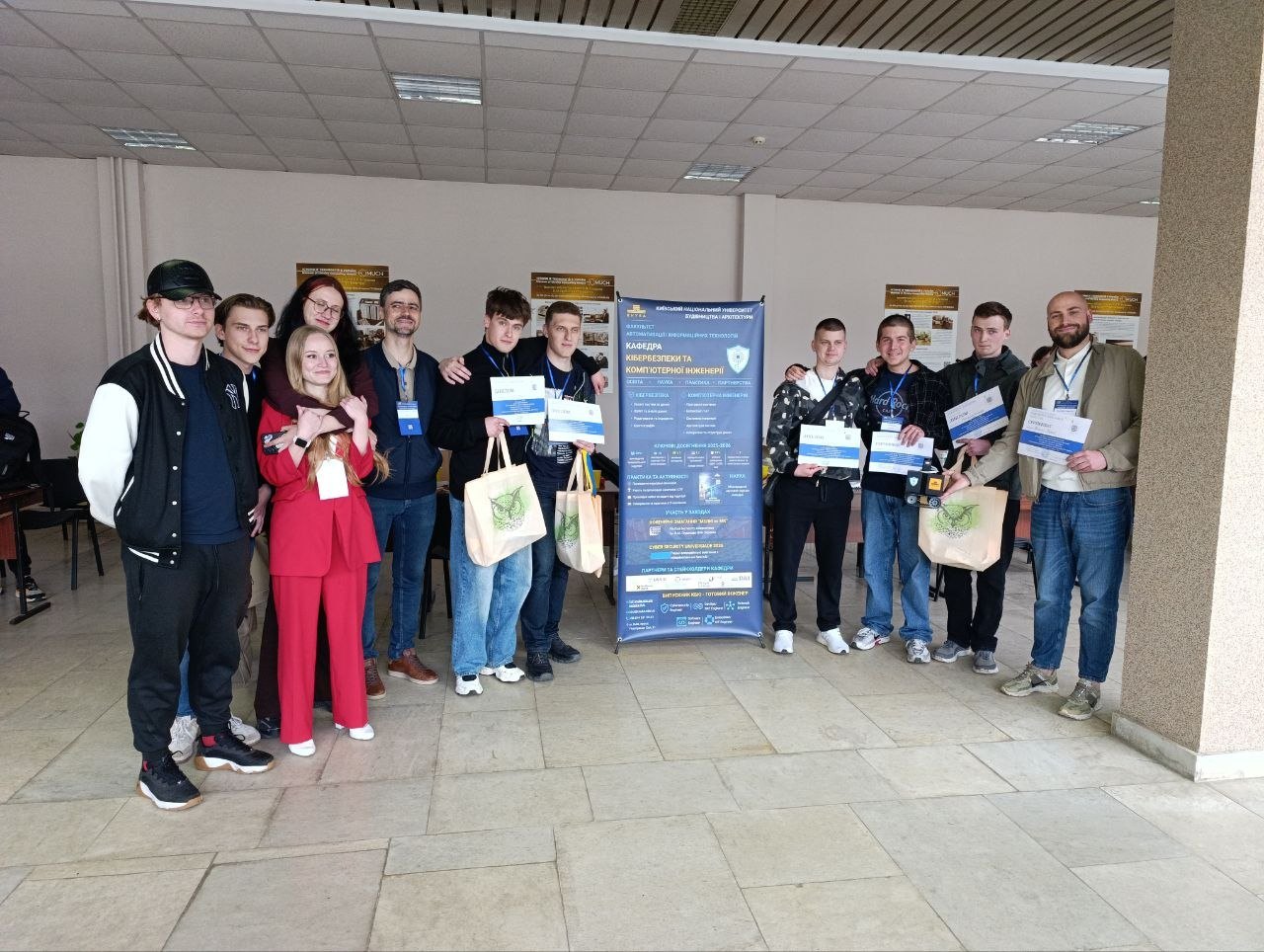
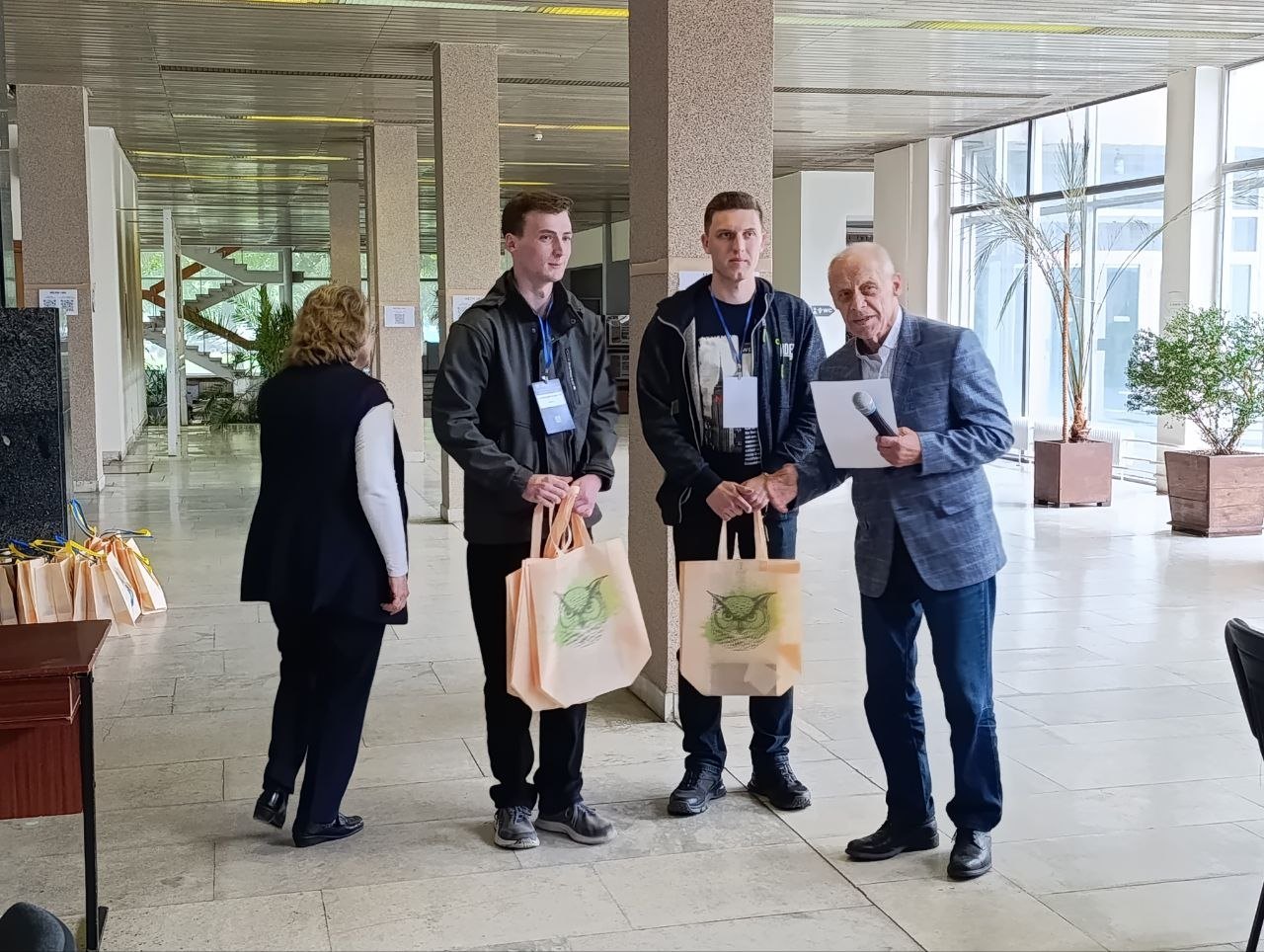
The ContiMech.org team visited the hackathon and joined the event-day activities together with representatives and teams connected with KPI, KNUBA, and KNEU. The strongest result was not only the competition itself. It was the contact network that appeared around it.
Universities met each other in a practical engineering context, shared updates, supported each other publicly, and created a visible cross-university interaction. This is exactly the type of environment where technical education becomes more applied, faster, and closer to real engineering work.
What we observed
One of the main conclusions is clear: engineering practice and IT should enter education as a regular mechanism, not as an occasional addition. Microcontrollers, embedded software, robotics, automation, documentation, and prototype validation should be part of the normal educational environment.
Feedback for the host-side process
We also want to give direct but constructive feedback. The V.M. Glushkov Institute of Cybernetics provided an important platform for the event and helped gather students, universities, and engineering-oriented participants in one place. This deserves respect.
At the same time, the host-side process needs serious modernization. The event idea was strong, and the universities and students were at a good level. However, the operational model did not match the expectations for a modern engineering hackathon.
In practice, several parts of the event were closer to a mixed exhibition of heterogeneous prototypes than to a controlled engineering competition. The teams worked with different equipment, different task contexts, and different levels of preparation. This made direct comparison more difficult and reduced the engineering clarity of the final evaluation.
For future editions, we recommend treating the hackathon as an engineering project with a dedicated process owner, a technical owner, a published timeline, a frozen task package, a unified equipment matrix, a confirmed jury list, and one controlled communication channel.
The evaluation process should also be protected by design: fixed scoring criteria, documented jury roles, no late jury replacement unless unavoidable, and no informal influence on the commission during scoring.
Process lesson
The event showed that strong technical content requires a mature event process. A modern engineering hackathon needs clear ownership, fixed timing, unified equipment conditions, transparent judging criteria, controlled task packages, and a predictable participant workflow.
This is the reason ContiMech wants the next edition to use a more structured host model: either directly under ContiMech.org or together with one of the university partners. The goal is not to replace the idea of the event. The goal is to make the process mature enough for a real engineering competition.
Next format
- 24+ hour competition with continuous engineering work, not only short presentations.
- Equal tasks for all teams, with comparable constraints and evaluation conditions.
- Unified equipment set so that results are compared fairly.
- Clear judging model focused on architecture, implementation, demo stability, documentation, and practical value.
- Final technical package: short report, source code or repository, demo evidence, and engineering notes.
ContiMech plans to participate again. The next step should be more practical, more technical, and more ambitious.
Think in bits. Act in hardware.
Links
- Official event page — V.M. Glushkov Institute of Cybernetics
- Igor Sikorsky Kyiv Polytechnic Institute (KPI)
- Department of Automation and Design of Energy Processes and Systems (APEPS), KPI
- Kyiv National University of Construction and Architecture (KNUBA)
- Kyiv National Economic University named after Vadym Hetman (KNEU)